

Saving money does not have to mean giving up everything you enjoy.
Many people think saving requires cutting out restaurants, avoiding entertainment, buying the cheapest products, or completely changing their lifestyle. That approach can work for a short time, but it often becomes frustrating. Eventually, you may feel restricted and return to your old spending habits.
If your income is limited, learning how to save money on a low income can also help you reduce financial pressure without making your lifestyle feel overly restrictive.
A better approach is to learn how to save money on everyday expenses without feeling deprived.
The goal is not to stop spending money. It is to become more intentional about where your money goes. Small changes to groceries, eating out, subscriptions, shopping, transportation, and everyday purchases can create meaningful savings without making your life feel boring.
In this guide, you will learn practical ways to reduce everyday expenses while still enjoying the things that matter to you.
What Does It Mean to Save Money Without Feeling Deprived?
Saving money without feeling deprived means reducing unnecessary spending while keeping room in your budget for things you genuinely enjoy.
For example, instead of completely stopping eating out, you might eat at home most days and keep one day for a meal you enjoy outside.
Instead of canceling every subscription, you can keep the one you use regularly and remove the subscriptions you rarely open.
Instead of never buying new clothes, you can wait for a genuine need and look for a good deal before purchasing.
The idea is simple:
Spend less on things that do not matter much to you so you have more money for the things that do.
This approach is much easier to maintain than extreme budgeting.
1. Start by Tracking Your Everyday Spending

Before trying to reduce your expenses, find out where your money is actually going.
Many small purchases seem harmless individually. A snack here, a coffee there, a delivery fee, an unnecessary online purchase, or a few extra items at the grocery store can quietly add up.
The CFPB spending tracker guidance also recommends tracking your spending for at least a couple of weeks or a month to get a clearer picture of your habits.
For one month, track your spending.
You can use:
- A notes app on your phone
- A spreadsheet
- A budgeting app
- A simple notebook
- Your bank transaction history
Create categories such as:
- Groceries
- Eating out
- Transportation
- Shopping
- Entertainment
- Subscriptions
- Bills
- Personal spending
You do not need a complicated budgeting system.
Once you understand your spending habits, the 50/30/20 budget rule can give you a simple framework for organizing your income and deciding how much to put toward needs, wants, and savings.
The purpose is simply to become aware of your spending patterns.
Once you know where your money is going, you can identify expenses that are easy to reduce.
Look for Your Biggest Spending Leaks
After tracking your expenses, ask yourself:
“Which purchases give me the least value for the money I spend?”
That is where you should start.
You do not need to cut everything. Focus on the expenses that provide little value but take a noticeable amount of money from your budget.
2. Use the 24 Hour Rule Before Buying Something
Impulse purchases are one of the easiest ways to waste money.
You see something online, think you need it, and buy it immediately. A few days later, you may realize that you barely use it.
The 24 hour rule can help.
When you want something that is not essential, wait at least one day before purchasing it.
During that time, ask yourself:
- Do I actually need this?
- Will I still want it tomorrow?
- Do I already own something similar?
- How often will I use it?
- Is there a cheaper alternative?
- Would I rather use this money for something more important?
For larger purchases, consider waiting even longer.
This simple pause can eliminate many unnecessary purchases without making you feel like you are never allowed to buy anything.
3. Make Eating at Home Easier
Food can become a major everyday expense, especially when ordering meals or eating outside becomes a habit.
However, completely eliminating restaurants is not necessary.
Instead, make home cooking easier.
Plan a few simple meals that you actually enjoy. Keep basic ingredients available so you can prepare something quickly when you are hungry.
For example, you could prepare:
- Rice and chicken
- Eggs and toast
- Pasta
- Sandwiches
- Homemade wraps
- Simple vegetable dishes
- Oatmeal
- Homemade snacks
The goal is not to become a professional chef.
The goal is to make eating at home convenient enough that ordering food does not always feel like the easiest option.
Keep Some Room for Eating Out
If you enjoy restaurants or takeout, include them in your budget.
For example, instead of ordering whenever you feel like it, choose one or two occasions during the week.
This gives you something to look forward to while keeping the expense under control.
4. Plan Your Grocery Shopping
Unplanned grocery shopping can quickly increase your spending.
Before going to the store, make a list based on what you already have at home and what you actually need.
Then try to stick to the list.
A simple grocery plan can help you:
- Avoid duplicate purchases
- Reduce food waste
- Avoid unnecessary snacks
- Buy ingredients for multiple meals
- Take advantage of useful discounts
- Reduce frequent trips to the store
You can also check your refrigerator, freezer, and cupboards before shopping.
Sometimes you already have enough food at home but forget about it because it is hidden behind newer purchases.
Do Not Automatically Buy the Cheapest Product
Saving money does not always mean buying the cheapest option.
A very cheap product that needs to be replaced quickly may cost more over time than a reasonably priced product that lasts longer.
Compare quality, quantity, durability, and actual usefulness rather than focusing only on the price tag.
5. Reduce Food Waste
Food waste is essentially money thrown away.
If you regularly buy more food than you can eat, reducing waste can create savings without making you feel deprived.
Try these habits:
- Store food properly
- Freeze items you will not eat soon
- Plan meals around ingredients you already have
- Check expiration dates
- Use leftovers creatively
- Avoid buying large quantities unless you will actually use them
For example, leftover chicken can become a sandwich or wrap the next day.
The goal is to get more value from the food you already paid for.
6. Review Your Subscriptions
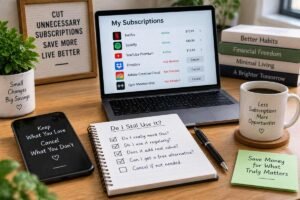
Subscriptions are easy to forget because the payments often happen automatically.
Go through your bank or card transactions and make a list of recurring payments.
Look at:
- Streaming services
- Music subscriptions
- Cloud storage
- Apps
- Gaming services
- Fitness memberships
- Software subscriptions
- Other recurring services
For each subscription, ask:
“Did I use this enough during the last month to justify keeping it?”
If the answer is no, consider canceling it.
Reviewing recurring expenses is also an important part of learning how to manage your money effectively and keeping your budget under control.
You can always subscribe again later if you genuinely need it.
7. Use a “Wish List” Instead of Buying Immediately
Instead of purchasing something the moment you want it, create a wish list.
When you see something you like, add it to the list instead of buying it immediately.
After a few weeks, review the list.
You may discover that you no longer want many of the items.
This works especially well for:
- Clothes
- Electronics
- Accessories
- Home decorations
- Gaming products
- Online shopping
The waiting period separates genuine needs and long-term wants from temporary excitement.
8. Find Free or Low Cost Entertainment
Entertainment does not always have to be expensive.
There are many ways to enjoy your free time without constantly spending money.
Depending on your interests, you could:
- Go for a walk
- Exercise outdoors
- Play sports
- Read books
- Watch free educational content
- Spend time with friends
- Explore local places
- Learn a new skill
- Cook something new
- Work on a personal project
The goal is not to eliminate paid entertainment.
Instead, create a mixture of free, low cost, and paid activities.
That gives you variety without making your lifestyle feel restricted.
9. Be Careful With Small Daily Purchases
Small purchases can become expensive when they happen repeatedly.
A single snack may not seem important. But if you make several small purchases every day, the total can become significant.
Look at your habits rather than individual transactions.
For example, ask yourself:
“What do I buy almost automatically?”
Maybe it is:
- Snacks
- Drinks
- Coffee
- Delivery fees
- Convenience-store purchases
- In app purchases
- Frequent online shopping
You do not necessarily need to eliminate these completely.
Try reducing their frequency.
That is often easier psychologically than telling yourself you can never have them again.
10. Use the “Cost Per Use” Idea
When considering a purchase, think about how often you will actually use it.
Suppose you are considering buying something that you will use once.
It may not provide much value.
But if you purchase something you will use several times a week for years, the cost per use can become relatively small.
This way of thinking can help you avoid cheap purchases that you rarely use while allowing yourself to spend money on quality items that genuinely improve your life.
The goal is to spend intentionally, not simply to spend as little as possible.
11. Compare Prices Before Major Purchases
For larger purchases, avoid buying from the first seller you find.
Take a few minutes to compare prices.
Check:
- Different stores
- Online marketplaces
- Discounts
- Delivery costs
- Warranty terms
- Product quality
- Customer reviews
However, do not let discounts convince you to buy something you did not need.
A discount does not automatically make a purchase financially smart.
If you spend money on something unnecessary simply because it is on sale, you are still spending money.
12. Reduce Transportation Costs Where Practical
Transportation can become a significant everyday expense.
Look for practical ways to reduce unnecessary travel costs.
Depending on your situation, you might:
- Combine multiple errands into one trip
- Walk short distances
- Use public transportation
- Share rides
- Plan routes more efficiently
- Avoid unnecessary trips
- Maintain your vehicle properly
You do not need to choose the cheapest transportation option every time.
Instead, look for situations where a small change can reduce costs without significantly affecting your convenience.
13. Create a “Fun Money” Category
One of the biggest mistakes people make when budgeting is creating a plan that allows no room for enjoyment.
If every rupee or dollar has to go toward bills, savings, or debt repayment, the budget can start feeling like a punishment.
Instead, create a specific category for fun.
This money can be used for things such as:
- Eating out
- Entertainment
- Hobbies
- Small purchases
- Games
- Coffee
- Going out with friends
Once that money is available, you can spend it without feeling guilty.
The important part is keeping the amount reasonable and staying within the limit.
14. Automate Your Savings
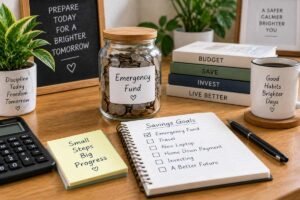
Saving money becomes easier when you do not have to make the decision every time.
If possible, automatically move a portion of your income into a separate savings account after you get paid.
Over time, automatic savings can help you build an emergency fund and prepare for other important financial goals.
This makes saving part of your normal financial routine.
Even if you start with a small amount, the habit matters.
Over time, automatic savings can help you build:
- An emergency fund
- Short term savings
- A future purchase fund
- Investment capital
- Retirement savings
The key is consistency.
If you are building savings for unexpected expenses, the CFPB emergency fund guide explains how an emergency fund can help cover unplanned costs and how to develop a consistent savings habit.
15. Focus on Value, Not Just Cutting Costs
The most important part of saving money without feeling deprived is understanding the difference between cheap and valuable.
Cheap means spending less.
Value means getting something worthwhile for the money you spend.
For example, you might decide that a particular hobby is genuinely important to you. Instead of eliminating it, you could reduce spending in areas you care less about.
Maybe you spend less on random online purchases so you can comfortably afford your hobby.
This approach makes your budget personal.
You are not simply asking:
“How can I spend less?”
You are asking:
“How can I use my money better?”
16. Give Yourself a Weekly Spending Limit
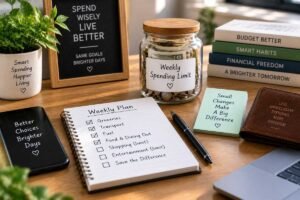
A weekly spending limit can make everyday budgeting easier.
Instead of constantly calculating your entire monthly budget, give yourself a realistic amount for flexible spending each week.
The money you save by staying within your limit can then be redirected toward important goals, such as building savings or paying off debt faster.
This can include things such as:
- Snacks
- Coffee
- Eating out
- Entertainment
- Small personal purchases
Once you understand your normal spending pattern, choose a limit that is challenging but realistic.
If the limit is extremely restrictive, you may abandon it quickly.
A realistic limit is easier to maintain.
For a broader budgeting framework, the Consumer.gov guide to making a budget explains how to list income and expenses, compare them, and adjust your spending plan over time.
17. Use a “One In, One Out” Rule
This simple rule can help control unnecessary purchases.
Whenever you buy something new, consider whether you already own something similar.
For certain categories, such as clothes, shoes, gadgets, or household items, you can follow a one-in, one-out approach.
For example, if you buy a new shirt, consider donating or removing an older shirt you no longer wear.
This prevents your spending and possessions from constantly growing.
18. Have a Monthly “Money Check In”
Set aside a little time once a month to review your finances.
Look at:
- Total spending
- Savings
- Bills
- Subscriptions
- Unnecessary purchases
- Progress toward financial goals
Do not use this session to criticize yourself.
Instead, treat it as a financial check-up.
Ask:
“What worked this month?”
“Where did I spend more than expected?”
“What small change can I make next month?”
This approach helps you improve gradually.
How to Save Money on Everyday Expenses Without Feeling Deprived
The biggest mistake is trying to change everything at once.
You do not need to stop eating out, cancel every subscription, stop shopping, and completely change your lifestyle tomorrow.
Start with two or three areas.
For example:
Week 1: Track all spending.
Week 2: Reduce unnecessary food delivery.
Week 3: Cancel unused subscriptions.
Week 4: Start automatic savings.
Once these habits become normal, you can make additional improvements.
Small changes are often easier to maintain than extreme financial restrictions.
A Simple Everyday Saving Plan
If you want a straightforward starting point, try this:
Step 1: Track your spending
Write down everything you spend for 30 days.
Step 2: Find three unnecessary expenses
Choose expenses that provide little value.
Step 3: Reduce instead of completely eliminating
If you eat out frequently, reduce the frequency instead of banning restaurants.
Step 4: Create a fun money limit
Give yourself permission to spend a reasonable amount on things you enjoy.
Step 5: Automate savings
Move part of your income into savings automatically.
Step 6: Review your progress monthly
Keep what works and change what does not.
This system is simple enough for beginners and flexible enough to adapt as your financial situation changes.
Final Thoughts
Learning how to save money on everyday expenses without feeling deprived is not about living a miserable life or refusing yourself everything you enjoy.
It is about becoming more intentional with your money.
Track your spending, reduce unnecessary purchases, plan your meals, review subscriptions, avoid impulse buying, compare prices, and create room for things that genuinely make you happy.
Most importantly, do not try to become perfect overnight.
A small reduction in unnecessary spending can become a powerful habit when you repeat it consistently.
The goal is not to spend nothing.
The goal is to make sure your money is going toward the things that matter most to you.
When you learn to spend intentionally, saving money becomes less about sacrifice and more about control.