

Introduction
Debt can feel overwhelming, especially when your monthly payments never seem to make a real difference. Whether it’s credit card debt, a personal loan, a student loan, or money borrowed from family or friends, carrying debt for a long time can create financial stress and make it harder to reach your goals. we will study about how to How to Pay Off Debt Faster in easy simple ways.
The good news is that paying off debt faster is possible with the right plan. You don’t need to earn a huge salary or make drastic lifestyle changes. Small, consistent actions can help you reduce what you owe and become debt free sooner than you might expect.
In this beginner friendly guide, you’ll learn 19 proven strategies to pay off debt faster, avoid common mistakes, and build healthier financial habits for the future. Whether you’re just starting your debt repayment journey or looking for ways to speed up your progress, these practical tips can help you take control of your finances.
If your debt mainly comes from credit cards, understanding how credit cards work can help you avoid costly mistakes in the future.
What Is Debt?
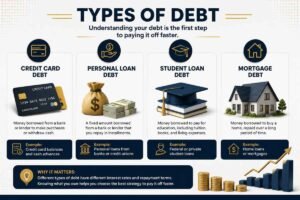
Debt is money that you borrow from a person, bank, or financial institution with the agreement that you’ll repay it later. In most cases, you’ll also pay interest, which is the cost of borrowing money.
Some of the most common types of debt include:
- Credit card debt
- Personal loans
- Student loans
- Auto loans
- Home loans (mortgages)
- Medical bills
- Money borrowed from family or friends
Not all debt is necessarily bad. For example, a home loan or a student loan can help you achieve important life goals. However, carrying too much debt or missing payments can lead to financial problems, lower your credit score, and increase the amount you pay in interest over time.
The key is to manage debt responsibly and pay it off as quickly as your budget allows.
Why Paying Off Debt Faster Matters
Getting out of debt isn’t just about saving money. It also gives you greater financial freedom and peace of mind.
When you pay off debt faster, you can:
- Save money on interest charges.
- Reduce financial stress.
- Improve your credit score by making consistent payments.
- Free up money for savings and investing.
- Reach financial goals like buying a home or starting a business sooner.
- Build healthier money habits that benefit you for years to come.
Every extra payment you make today brings you one step closer to becoming debt free.
19 Proven Strategies to Pay Off Debt Faster
1. Know Exactly How Much You Owe
The first step is understanding your financial situation.
Create a list of every debt you have, including:
- Total balance
- Interest rate
- Minimum monthly payment
- Due date
Seeing everything in one place helps you create a realistic repayment plan and avoid missing payments.
2. Create a Realistic Budget
A budget helps you understand where your money goes every month. Without one, it’s easy to spend more than you realize and have less money available for debt payments.
Start by listing your monthly income and essential expenses, such as rent, groceries, transportation, and utility bills. Then identify non essential spending like dining out, online shopping, or multiple streaming subscriptions.
Once you know where your money is going, look for areas where you can cut back. Even saving a small amount each month can help you pay off your debt faster.
If you’re new to budgeting, you can also check out our guide on the 50/30/20 Budget Rule to create a simple and effective monthly budget.
3. Pay More Than the Minimum Payment
Making only the minimum payment may keep your account in good standing, but it also means you’ll spend much longer paying off your debt. You’ll also end up paying more in interest over time.
Whenever possible, pay more than the required minimum amount. Even an extra $20 or $50 each month can make a noticeable difference in how quickly you become debt free.
For example, if your minimum payment is $100, try paying $130 or $150 instead. The extra amount goes toward reducing your balance, helping you save money on future interest charges.
4. Focus on One Debt at a Time
If you have multiple debts, trying to pay extra on all of them at once can be overwhelming.
Instead, choose one debt to focus on while continuing to make the minimum payments on your other debts. Once the first debt is fully paid, use the money you were paying toward it to tackle the next one.
This approach keeps you organized and helps you stay motivated as you see real progress.
5. Use the Debt Avalanche Method
The Debt Avalanche Method focuses on paying off the debt with the highest interest rate first.
Here’s how it works:
- Make the minimum payment on all your debts.
- Put any extra money toward the debt with the highest interest rate.
- Once that debt is paid off, move to the debt with the next highest interest rate.
This strategy helps you save the most money on interest over time, making it one of the most cost effective ways to become debt free.
The Consumer Financial Protection Bureau (CFPB) also provides helpful information on managing debt, understanding loans, and improving your financial habits.
6. Try the Debt Snowball Method
If staying motivated is more important to you than saving the most on interest, the Debt Snowball Method may be a better choice.
With this method:
- Pay the minimum on all your debts.
- Put any extra money toward the debt with the smallest balance.
- After paying off the smallest debt, roll that payment into the next smallest debt.
Paying off smaller debts quickly gives you a sense of accomplishment, which can encourage you to keep going.
There is no right or wrong choice. Pick the method that best fits your personality and financial situation.
7. Reduce Unnecessary Spending
One of the fastest ways to free up extra money is by cutting expenses that aren’t essential.
Take a close look at your monthly spending and ask yourself whether each expense is truly necessary.
You might be able to save money by:
- Cooking more meals at home.
- Canceling subscriptions you rarely use.
- Shopping with a grocery list.
- Waiting a day before making impulse purchases.
- Looking for discounts and cashback offers.
You don’t have to give up everything you enjoy. Making a few smart changes can create extra cash to put toward your debt every month.
If your income is limited, these practical tips to save money on a low income can help you free up more money for debt payments.
8. Increase Your Income
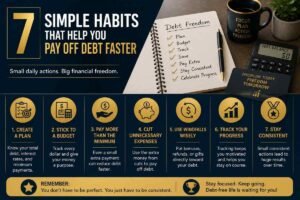
Reducing expenses is helpful, but earning more money can speed up your debt repayment even further.
Consider finding additional ways to earn income, such as:
- Taking on freelance work.
- Starting a side hustle.
- Selling items you no longer use.
- Working overtime if it’s available.
- Offering a skill like tutoring, graphic design, or writing.
If you receive extra money from a bonus, tax refund, or gift, consider putting all or part of it toward your debt instead of spending it.
Increasing your income while keeping your expenses under control is one of the most effective ways to pay off debt faster.
Earning extra income is one of the fastest ways to speed up debt repayment. Explore these legitimate ways to make money online as a beginner.
9. Avoid Taking on New Debt
One of the biggest mistakes people make while paying off debt is adding more debt along the way. This can slow your progress and make it even harder to become debt free.
Before making a purchase, ask yourself if it’s something you truly need or if it can wait. If possible, pay with cash or a debit card instead of relying on credit.
Staying focused on reducing your existing debt is much easier when you’re not creating new balances at the same time.
10. Make Extra Payments Whenever Possible
You don’t have to wait until your monthly due date to make an extra payment. Any additional amount you pay directly reduces your outstanding balance.
For example, if you receive:
- A work bonus
- A tax refund
- A cash gift
- Freelance income
- Profit from selling unused items
Consider using part or all of that money to pay down your debt.
Even occasional extra payments can shorten your repayment timeline and reduce the total interest you’ll pay.
11. Set Up Automatic Payments
Missing a payment can lead to late fees, higher interest charges, and even damage your credit score.
Setting up automatic payments helps ensure that at least your minimum payment is made on time every month. This removes the stress of remembering due dates and helps you build a positive payment history.
Just make sure you have enough money in your account before the payment is due to avoid overdraft fees.
12. Negotiate a Lower Interest Rate
Many people don’t realize that they can ask their lender or credit card provider for a lower interest rate.
If you’ve been making payments on time and have a good payment history, your lender may be willing to reduce your rate. Even a small reduction can save you money over the life of your debt.
It only takes a few minutes to ask, and the potential savings can be significant.
13. Consolidate Your Debt If It Makes Sense
If you have several high interest debts, debt consolidation may simplify your finances.
Debt consolidation combines multiple debts into a single loan or payment. This can make it easier to keep track of your finances and, in some cases, reduce the interest you pay.
However, debt consolidation isn’t the right choice for everyone. Before making a decision, compare interest rates, fees, and repayment terms carefully.
Before choosing any debt relief or consolidation service, review the guidance provided by the Federal Trade Commission (FTC) to help you avoid scams and make informed decisions.
14. Build a Small Emergency Fund
It may seem strange to save money while paying off debt, but having a small emergency fund can actually help you stay on track.
Unexpected expenses like car repairs, medical bills, or home maintenance can happen at any time. Without savings, you may have to rely on a credit card or another loan, increasing your debt.
Aim to save a small emergency fund first, then continue focusing on paying off your debt aggressively.
If you haven’t started one yet, our guide on How to Build an Emergency Fund from Scratch can help you get started.
15. Track Your Progress Every Month
Paying off debt is a long term goal, so it’s important to celebrate your progress along the way.
At the end of each month, review:
- How much debt you’ve paid off.
- Your remaining balance.
- Any extra payments you made.
- Your goals for the next month.
Seeing your balance decrease can keep you motivated, even if the progress feels slow at times.
You can use a spreadsheet, budgeting app, or even a notebook to monitor your progress.
16. Stay Consistent and Don’t Give Up
Paying off debt doesn’t happen overnight. Some people become debt free in a few months, while others may need several years.
The most important thing is to stay consistent. Continue making payments, stick to your budget, and avoid giving up if progress seems slow.
Remember that every payment, no matter how small, moves you closer to financial freedom. Consistency often matters more than making large payments once in a while.
17. Use Windfalls Wisely
Unexpected money can give your debt repayment plan a major boost.
Whenever you receive extra cash, think carefully before spending it. While it’s fine to enjoy a small portion, consider using the rest to reduce your debt.
Common examples of windfalls include:
- Tax refunds
- Annual bonuses
- Work incentives
- Cash gifts
- Inheritance money
- Refunds from large purchases
Applying these funds directly to your debt can help you pay it off months earlier and reduce the amount of interest you pay.
18. Learn From the Habits That Created Debt
Paying off debt is only half the journey. The other half is making sure you don’t end up in the same situation again.
Take some time to understand what caused your debt in the first place. Common reasons include:
- Overspending
- Impulse shopping
- Depending too much on credit cards
- Living beyond your means
- Not having an emergency fund
- Poor budgeting
Once you identify the cause, you can build healthier financial habits and make smarter decisions in the future.
19. Celebrate Milestones Along the Way
Becoming debt free is a big achievement, and every milestone deserves recognition.
For example, you could celebrate when you’ve paid off:
- Your first loan
- 25% of your total debt
- Half of your debt
- Your final payment
Your celebration doesn’t have to be expensive. Treat yourself to a favorite meal, enjoy a movie night at home, or spend time doing something you love.
Recognizing your progress helps you stay motivated and reminds you that your hard work is paying off.
How to Choose the Right Debt Repayment Method
This section will explain:
- When the Debt Snowball Method is the better choice.
- When the Debt Avalanche Method is the better choice.
- A simple comparison table.
- Which method is best for beginners.
This improves user experience because readers often wonder which strategy they should actually use.
Signs You’re Making Progress
This section will cover:
- Your total debt is decreasing every month.
- You’re paying more than the minimum payment.
- You’re avoiding new debt.
- You’re saving money on interest.
- You’re feeling less financial stress.
This gives readers encouragement and keeps them motivated.
Common Mistakes to Avoid When Paying Off Debt
Even with the best intentions, certain mistakes can slow your progress. Avoid these common pitfalls:
- Making only the minimum payment every month.
- Ignoring high interest debt.
- Taking on new debt before paying off existing balances.
- Missing payment due dates.
- Spending unexpected income instead of using it to reduce debt.
- Not having a budget.
- Giving up because progress seems slow.
Avoiding these mistakes can help you stay focused and reach your goal sooner.
Building better financial habits is just as important as paying off debt. Here’s how to manage your money more effectively.
Frequently Asked Questions (FAQs)
If you’re new to credit, read our guide on what is a credit score to understand how debt repayment can affect your financial future.
1. What is the fastest way to pay off debt?
The fastest way is to create a budget, pay more than the minimum payment whenever possible, reduce unnecessary expenses, increase your income, and focus on one debt at a time using either the Debt Avalanche or Debt Snowball method.
2. Should I save money or pay off debt first?
It depends on your situation. Building a small emergency fund before aggressively paying off debt is usually a smart idea because it can prevent you from borrowing money when unexpected expenses arise.
3. Is it better to pay off the smallest debt or the highest interest debt first?

Both methods can work well.
- The Debt Snowball Method focuses on paying off the smallest balance first to build motivation.
- The Debt Avalanche Method focuses on paying off the highest interest debt first to save more money over time.
Choose the method that best fits your financial goals and keeps you motivated.
4. Can paying off debt improve my credit score?
Yes. Paying your bills on time and reducing your outstanding balances can improve your credit score over time. A better credit score may also help you qualify for lower interest rates in the future.
You can also check your credit history by requesting your free credit report from AnnualCreditReport.com to better understand your financial standing.
5. How long does it take to become debt free?
There’s no single answer because it depends on the amount of debt you have, your income, your expenses, and how much you can pay each month. The important thing is to stay consistent and keep making progress.
Conclusion
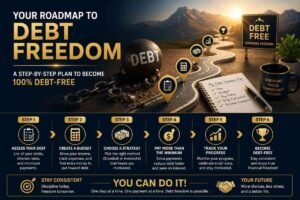
Paying off debt may seem challenging at first, but it’s completely achievable with the right strategy and consistent effort. You don’t need a perfect income or a complicated financial plan to make progress. Simple habits, smart budgeting, and regular payments can make a significant difference over time.
Start by understanding your debt, creating a realistic budget, and choosing a repayment strategy that works for you. Look for opportunities to reduce expenses, earn extra income, and make additional payments whenever possible. Most importantly, stay patient and committed to your goal.
Every payment you make brings you one step closer to financial freedom. The journey may take time, but the confidence, peace of mind, and financial stability you’ll gain are well worth the effort.
Once you’ve reduced your debt and built a solid financial foundation, you can confidently start investing to grow your wealth over the long term.
Next Read: If you’re working toward better financial health, don’t miss our guides on How to Manage Your Money Like a Pro, How to Build an Emergency Fund from Scratch, and How Do Credit Cards Work? These resources will help you build strong money habits and avoid debt in the future.