

Have you ever wondered how people buy something with a credit card even when they don’t have enough money in their bank account?
If you’re new to personal finance, credit cards can seem confusing at first. You might have heard people say that credit cards are either a great financial tool or a dangerous way to get into debt. The truth is that a credit card is neither good nor bad on its own. It all depends on how you use it.
Understanding how a credit card works is one of the most important financial skills you can learn. When used responsibly, a credit card can help you build a strong credit history, make secure online payments, earn rewards, and handle unexpected expenses. However, using it carelessly can lead to high interest charges and financial stress.
If you’re also new to credit history, you may want to read our guide on What Is a Credit Score?, which explains how credit scores work and why they matter.
The good news is that learning the basics is much easier than most people think. Once you understand how credit limits, billing cycles, payments, and interest work together, using a credit card becomes much less intimidating.
In this beginner friendly guide, you’ll learn exactly how a credit card works, how banks make money from credit cards, what happens when you make a purchase, and how to use your first credit card wisely. By the end of this article, you’ll have the confidence to make smarter financial decisions and avoid the common mistakes many beginners make.
Key Takeaways
Before we get into the details, here are the most important points you’ll learn in this guide.
- A credit card lets you borrow money from a card issuer to make purchases.
- Every credit card comes with a spending limit known as a credit limit.
- You receive a billing statement after each billing cycle showing what you owe.
- Paying your full balance by the due date usually helps you avoid interest charges.
- Paying only the minimum amount can result in interest on the remaining balance.
- Responsible credit card use can help build a positive credit history over time.
- Missing payments or overspending can negatively affect your finances and your credit profile.
- Understanding how credit cards work helps you use them as a financial tool instead of falling into unnecessary debt.
What Is a Credit Card?
A credit card is a payment card that allows you to borrow money from a bank or another financial institution to make purchases. Instead of paying with your own money immediately, you use the lender’s money and agree to repay it later.
Every credit card comes with a pre approved borrowing limit called a credit limit. This limit is the maximum amount you can spend using the card at any given time. For example, if your credit limit is $2,000, you can make purchases up to that amount before you need to repay some or all of your balance.
Unlike a debit card, which takes money directly from your bank account, a credit card lets you borrow first and pay later. This flexibility makes credit cards useful for everyday purchases, online shopping, travel, and emergency expenses. However, responsible use is essential because any unpaid balance may result in interest charges.
To learn more about how credit cards work and your rights as a consumer, visit the Consumer Financial Protection Bureau.
How Does a Credit Card Work?
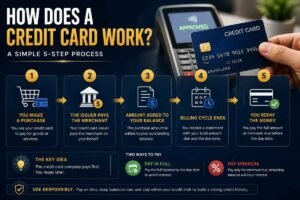
Understanding how a credit card works becomes much easier when you break the process into simple steps.
Step 1: You Make a Purchase
Imagine you visit an electronics store and buy a pair of headphones worth $100 using your credit card.
When you tap, insert, or swipe your card, the payment request is sent to your credit card issuer for approval.
If your card is active and you have enough available credit, the transaction is approved within seconds.
You leave the store with your headphones even though no money has yet been taken from your bank account.
Step 2: The Credit Card Issuer Pays the Merchant
After your purchase is approved, the credit card company pays the merchant on your behalf.
At this point, the merchant has received payment, while you now owe that amount to your credit card issuer.
In simple terms, the credit card company has temporarily covered your purchase.
Step 3: The Purchase Is Added to Your Balance
The amount you spent is added to your outstanding balance.
For example:
- Credit limit: $2,000
- Purchase: $100
- Remaining available credit: $1,900
You can continue making purchases until you reach your credit limit.
Step 4: Your Billing Cycle Ends
Every credit card operates on a billing cycle. This is the period during which all your purchases are recorded.
At the end of the billing cycle, your card issuer prepares a statement that includes:
- Total purchases
- Previous balance
- Payments received
- Fees, if any
- Interest charges, if applicable
- Total amount due
- Payment due date
This statement tells you exactly how much you owe.
Step 5: You Repay the Money
You can repay your balance in different ways.
The best option is paying the full statement balance before the due date. Doing so usually helps you avoid paying interest on your purchases.
Some people choose to pay only the minimum amount due. While this keeps the account in good standing, the remaining balance usually continues to accrue interest according to the card’s terms.
Paying only the minimum amount month after month can make it take much longer to repay your debt and increase the total amount you pay over time.
Who Is Involved in a Credit Card Transaction?
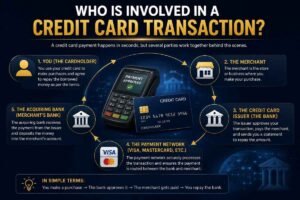
Although using a credit card feels simple, several parties work together behind the scenes to complete every payment.
You (The Cardholder)
You use the credit card to make purchases and agree to repay the borrowed money according to the card’s terms.
The Merchant
The merchant is the business or store where you make your purchase.
The Credit Card Issuer
The issuer is usually a bank or financial institution that provides the credit card, approves transactions, and sends your monthly billing statement.
The Payment Network
Payment networks process transactions between merchants and card issuers.
Some of the most widely recognized payment networks include:
- Visa
- Mastercard
- American Express
- Discover
These companies generally do not lend money directly to most cardholders. Instead, they provide the payment infrastructure that allows transactions to be processed securely.
A Simple Real Life Example
Let’s say Sarah has a credit card with a credit limit of $1,000.
She buys:
- Groceries for $120
- Fuel for $60
- A pair of shoes for $70
Her total spending becomes $250.
This means she still has $750 of available credit remaining.
At the end of the billing cycle, Sarah receives her statement showing a balance of $250.
If she pays the full $250 before the due date, she can usually avoid paying interest on those purchases.
If she pays only the minimum amount required, the remaining balance may continue to incur interest, making her purchases more expensive over time.
This simple example shows why understanding how a credit card works is important. It allows you to enjoy the convenience of borrowing while staying in control of your finances.
What Is a Credit Limit?
A credit limit is the maximum amount of money your credit card issuer allows you to borrow using your card. This limit is assigned when your credit card application is approved and can vary from person to person.
Your credit limit is based on several factors, including your income, credit history, repayment behavior, and the issuer’s lending policies.
For example, if your credit limit is $3,000 and you’ve already spent $800, you’ll have $2,200 of available credit remaining.
Using your entire credit limit isn’t a good idea, even if you’re able to repay it. Keeping your balance relatively low compared to your credit limit is generally considered a healthy financial habit and may help maintain a stronger credit profile over time.
Factors That Can Affect Your Credit Limit
Your credit limit may increase or decrease depending on factors such as:
- Your payment history
- Your income
- Your existing debts
- How responsibly you use your credit card
- Your relationship with the card issuer
Many banks review accounts regularly and may increase a customer’s credit limit if they consistently make payments on time and use their card responsibly.
Understanding the Credit Card Billing Cycle
A billing cycle is the period during which all your credit card transactions are recorded. Most billing cycles last about a month, although the exact length depends on your card issuer.
Every purchase, refund, payment, and fee during this period appears on your monthly statement.
At the end of the billing cycle, you’ll receive a statement that includes:
- Opening balance
- New purchases
- Payments you’ve made
- Any fees or interest charges
- Total statement balance
- Minimum payment due
- Payment due date
Reviewing your monthly statement helps you track your spending and spot any unexpected transactions.
What Is a Grace Period?
A grace period is the time between the end of your billing cycle and your payment due date.
During this period, many credit cards allow you to pay your full statement balance without being charged interest on new purchases. However, grace periods vary by issuer and may not apply in every situation, so it’s important to read your card’s terms and conditions.
For example:
- Your billing cycle ends on the 1st of the month.
- Your payment is due on the 25th.
- If you pay your full statement balance by the 25th, you may avoid interest on eligible purchases.
This is one of the biggest advantages of using a credit card responsibly.
How Does Credit Card Interest Work?
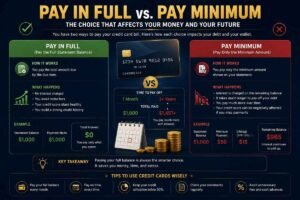
Credit card interest is the cost of borrowing money from your card issuer.
If you pay your full statement balance by the due date, many credit cards do not charge interest on new purchases during the grace period.
However, if you carry a balance into the next billing cycle, interest may be charged on the unpaid amount according to your card agreement.
The interest rate is often shown as an Annual Percentage Rate (APR). A higher APR means borrowing money becomes more expensive if you don’t pay your balance in full.
Example
Imagine your statement balance is $500.
If you pay the full $500 before the due date, you may not pay any interest on eligible purchases.
If you pay only $100, the remaining $400 may begin accruing interest based on your card’s APR and terms.
That’s why paying your balance in full whenever possible is usually the most cost-effective approach.
What Is the Minimum Payment?
The minimum payment is the smallest amount you must pay by the due date to keep your account in good standing.
Although paying only the minimum helps you avoid a late payment, it doesn’t eliminate your remaining balance.
The unpaid portion generally continues to accrue interest, making your purchases more expensive over time.
For this reason, financial experts often recommend paying the full statement balance whenever your budget allows.
What Happens If You Miss a Payment?
Missing a credit card payment can have several consequences.
Depending on your card issuer and local regulations, you may experience:
- Late payment fees
- Interest charges on unpaid balances
- A negative impact on your credit history
- Reduced access to future credit opportunities
If you accidentally miss a payment, try to make it as soon as possible and contact your card issuer if you need assistance. Setting up automatic payments or payment reminders can also help you avoid missing future due dates.
Understanding these basics gives you a strong foundation for using a credit card wisely and avoiding unnecessary financial stress.
Benefits of Using a Credit Card Responsibly
When used wisely, a credit card can be much more than just a convenient way to pay for purchases. It can become a valuable financial tool that helps you manage expenses, build a positive credit history, and enjoy additional benefits.
Tracking your expenses regularly is one of the easiest ways to manage your money effectively and stay on top of your financial goals.
Here are some of the biggest advantages of responsible credit card use.
1. Build a Positive Credit History
Making payments on time and managing your credit responsibly can help you build a positive credit history over time.
A strong credit history may make it easier to qualify for financial products such as loans, mortgages, or additional credit cards in the future. Approval decisions always depend on the lender’s requirements and your individual financial situation.
2. Safer Online Shopping
Credit cards often include security features that help protect cardholders against unauthorized transactions. Many issuers also offer fraud monitoring and secure payment systems, giving you extra confidence when shopping online.
Regardless of the payment method you use, it’s still important to shop only on trusted websites and protect your personal information.
3. Emergency Financial Support
Unexpected expenses can happen at any time. Your car may need repairs, a household appliance may stop working, or you may face an urgent travel expense.
A credit card can provide temporary financial flexibility when you don’t have enough cash available. However, emergency spending should still be repaid as quickly as possible to reduce interest costs.
Even so, relying on savings instead of borrowing is usually the better long-term approach. That’s why every beginner should learn how to build an emergency fund for unexpected expenses.
4. Rewards and Cashback
Many credit cards offer rewards programs that allow you to earn benefits on eligible purchases.
Depending on the card, these rewards may include:
- Cashback
- Travel points
- Airline miles
- Shopping rewards
- Gift cards
These benefits vary by issuer and card type, so it’s important to understand the terms before choosing a credit card.
5. Easy Expense Tracking
Your monthly credit card statement provides a detailed record of your spending.
This can help you:
- Monitor your monthly expenses.
- Identify unnecessary spending.
- Create a more accurate budget.
- Improve your money management habits.
Common Credit Card Mistakes to Avoid
Many beginners make avoidable mistakes simply because they don’t fully understand how credit cards work.
The Federal Trade Commission (FTC) offers guidance on avoiding credit card scams, protecting personal information, and reporting fraud to keep your finances secure.
Learning about these mistakes now can help you save money and avoid financial stress later.
Paying Only the Minimum Amount
Paying only the minimum payment every month may seem convenient, but it often increases the amount of interest you pay over time.
Whenever possible, pay your full statement balance before the due date.
Missing Payment Deadlines
Late payments may result in fees, interest charges, and potential damage to your credit history.
Setting up automatic payments or calendar reminders can help you stay on schedule.
Spending Beyond Your Budget
Just because your credit limit allows you to spend more doesn’t mean you should.
Treat your credit card like a payment tool, not as extra income.
A good habit is to buy only what you can realistically afford to repay.
Ignoring Your Monthly Statement
Many people never review their monthly statements.
Checking your statement each month helps you:
- Verify your purchases.
- Spot unauthorized transactions.
- Understand your spending habits.
- Detect possible billing errors.
Applying for Too Many Credit Cards
Opening several credit cards in a short period may not be the right choice for beginners.
It’s usually better to learn how to manage one card responsibly before applying for additional cards.
Debit Card vs Credit Card
Many people confuse debit cards and credit cards because they look similar and can both be used for shopping.
However, they work in very different ways.
| Feature | Debit Card | Credit Card |
| Source of Money | Your own bank account | Borrowed money from the card issuer |
| Monthly Bill | No | Yes |
| Interest Charges | No | Possible if you carry a balance |
| Credit History | Usually doesn’t help build credit | Responsible use may help build credit history |
| Spending Limit | Available bank balance | Approved credit limit |
The biggest difference is simple.
A debit card spends your own money.
A credit card lets you borrow money first and repay it later according to your card agreement.
Understanding this difference helps you choose the right payment method for different situations.
Tips for First-Time Credit Card Users
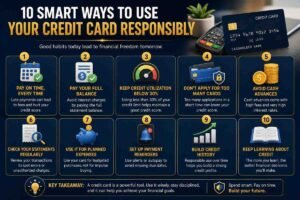
Following the 50/30/20 budget rule can make it easier to control your spending and ensure you always have enough money to pay your credit card bill on time.
If you’re getting your first credit card, these simple habits can help you use it responsibly from day one.
Spend Within Your Budget
Only make purchases that you know you can comfortably repay.
Avoid using your credit card to buy things you cannot afford.
Pay Your Bill on Time
Making payments before the due date is one of the best financial habits you can develop.
Timely payments can help you avoid unnecessary fees and interest.
Pay the Full Statement Balance Whenever Possible
Paying your entire statement balance is usually the easiest way to avoid interest on eligible purchases and keep your finances under control.
Keep Your Card Secure
Protect your credit card details and never share your PIN, passwords, or security codes with anyone.
If your card is lost or you notice suspicious activity, contact your card issuer immediately.
Review Your Statements Regularly
Checking your monthly statement allows you to monitor your spending and quickly identify any unusual transactions.
A few minutes each month can help you avoid bigger problems later.
By following these simple habits, you can enjoy the convenience of a credit card while reducing the risk of debt and maintaining healthy financial habits.